The question is fair and the answer matters. If you take an online ADHD test and it says you likely have ADHD, should you believe it? If it says you do not, should you rule it out?
The honest answer requires understanding what self-assessment tools actually measure, how they compare to clinical diagnosis, and why the accuracy question is more nuanced than a simple yes or no.
ADHD is the most commonly diagnosed neurodevelopmental condition in adults and also one of the most frequently self-diagnosed incorrectly. Getting clarity on what online tests can and cannot tell you matters both for people who need to find help and for people who are misattributing other issues to ADHD.
Key Statistics
|
What Online ADHD Tests Are Actually Measuring
A well-designed online ADHD screening tool does not diagnose ADHD. What it does is measure the frequency and severity of behaviours and experiences that are associated with ADHD in clinical populations. It then compares your pattern of responses to validated cutoff scores that indicate the likelihood of ADHD being present.
The gold standard instrument for adult ADHD self-assessment is the Adult ADHD Self-Report Scale (ASRS-v1.1), developed in collaboration with the World Health Organization. It consists of 18 questions based on the DSM-5 criteria for ADHD and has been validated in large clinical populations.
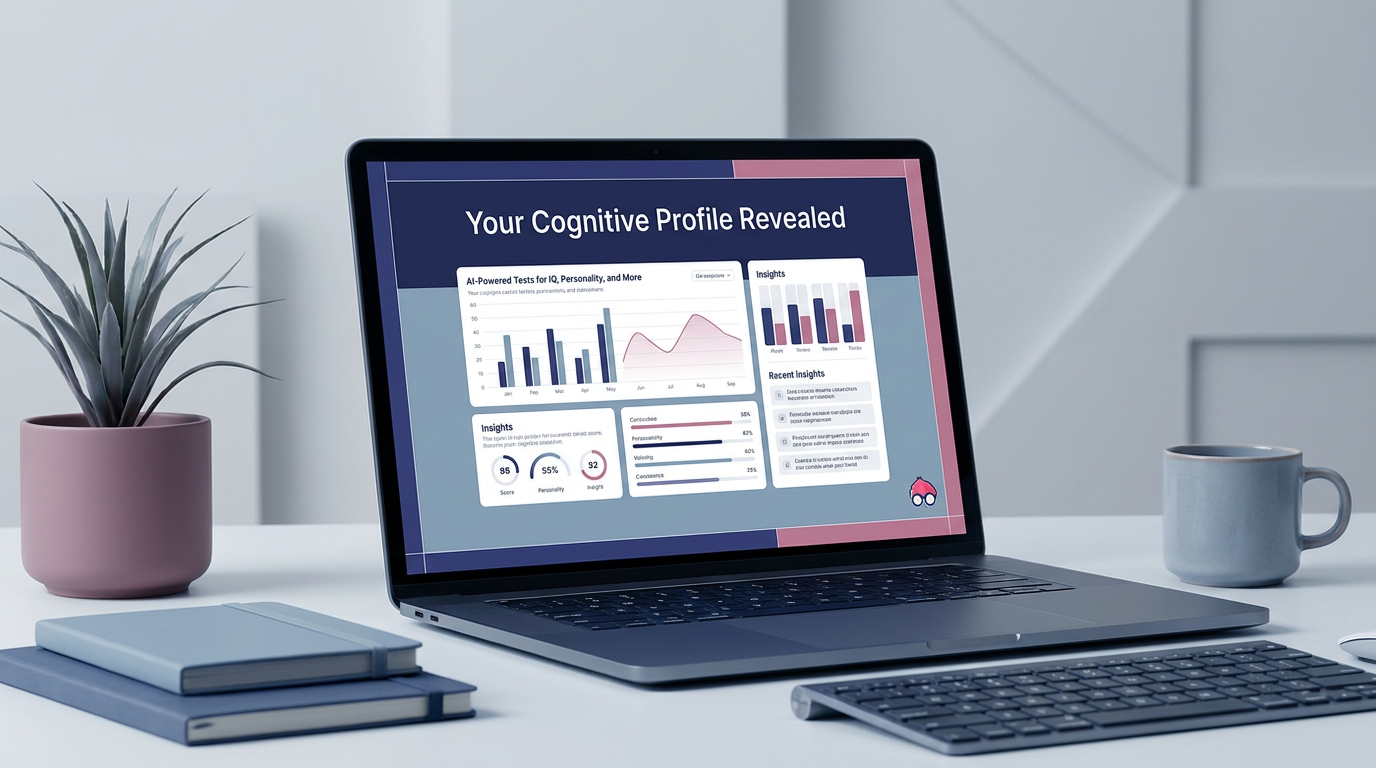
The Mindaura ADHD screening test is built on this validated methodology, using questions derived from the ASRS framework with additional items to capture the full range of ADHD presentations including inattentive, hyperactive-impulsive, and combined types.
The Accuracy Numbers: What the Research Actually Shows
The ASRS-v1.1 screener, which uses just the first 6 of the 18 questions as a quick screen, has been validated in multiple large studies. The most commonly cited figures are:
- Sensitivity of 68.7 percent: meaning it correctly identifies approximately 69 in 100 people who actually have ADHD
- Specificity of 99.5 percent: meaning it correctly identifies nearly all people who do not have ADHD as negative
What this means practically: if you screen positive on a validated ADHD tool, there is a high probability that something is genuinely present. If you screen negative, there is still approximately a 31 percent chance of a false negative, meaning the test missed a real case.
The full 18-question ASRS has better sensitivity than the 6-question screener, with some studies reporting sensitivity above 80 percent. Extended instruments like the Mindaura ADHD assessment that add more nuanced items can further improve discrimination.
The Biggest Accuracy Problem: Symptom Overlap
The most significant limitation of all ADHD self-report tools is that ADHD symptoms overlap substantially with several other common conditions.
Anxiety Disorders
Anxiety causes distractibility, difficulty concentrating, restlessness, and impulsive decision-making, all of which are core ADHD symptoms. Someone with generalised anxiety disorder can score highly on an ADHD screener without having ADHD. This is probably the most common source of false positive results.
Depression
Depression causes poor concentration, reduced working memory, fatigue, and difficulty initiating tasks. Someone experiencing a depressive episode may score highly on ADHD measures without having ADHD. Chronic low-grade depression can produce what looks like lifelong ADHD on a questionnaire.
Sleep Disorders
Chronic sleep deprivation produces nearly identical cognitive symptoms to ADHD: inattention, impulsivity, poor working memory, and emotional dysregulation. People who have undiagnosed sleep apnea or severe insomnia frequently screen positive for ADHD.
Thyroid Conditions
Both hyperthyroidism and hypothyroidism can produce ADHD-like symptoms. Hyperthyroidism causes restlessness, concentration difficulties, and impulsivity. Hypothyroidism causes brain fog, poor attention, and fatigue.
A clinician assessing for ADHD will systematically rule out these conditions. An online test cannot. This is why a positive screening result should always be followed up with professional assessment, not treated as a confirmed diagnosis.
How sharp is your mind?
Take the Quiz Test and get your personalised report instantly.
Start the Test →⏱ 5 min · 📊 Instant score
Why Online ADHD Tests Are Still Genuinely Useful
Despite their limitations, validated online ADHD screening tools serve several important functions that justify their existence.
Reducing the Barrier to Seeking Help
Many adults who have lived with undiagnosed ADHD for decades never sought help because they did not recognise that their experiences were related to a treatable condition. An online screening tool that gives them a framework and a positive result can be the first step in a journey toward appropriate diagnosis and support.
Preparation for Clinical Assessment
A detailed ADHD screening result gives you structured, specific information to bring to a clinician. Instead of saying ‘I think I might have ADHD,’ you can say ‘I scored significantly positive on a validated screener, specifically on inattentive symptoms, with moderate hyperactive-impulsive items.’ This improves the quality of the clinical conversation.
Self-Understanding
Even in the absence of formal diagnosis, understanding your symptom pattern has value. Knowing that your distractibility, time blindness, and difficulty with transitions are consistent with an inattentive ADHD profile gives you a framework for developing better management strategies regardless of whether you receive a formal diagnosis.
What to Do After a Positive Online ADHD Screening Result
- Do not self-diagnose or start self-medicating. A positive screening result is not a diagnosis. It is a signal to seek proper evaluation.
- See your GP or family doctor first. Describe your specific symptoms, their duration, and the contexts in which they appear. Bring your screening results.
- Request a referral to a psychiatrist or clinical psychologist specialising in adult ADHD. General practitioners often lack the specialist knowledge for adult ADHD assessment.
- Consider a private assessment if NHS or insurance waiting times are long. Adult ADHD assessments typically cost $300 to $800 privately but provide comprehensive evaluation.
- Track your symptoms before the assessment. Keep a daily log of specific ADHD-related difficulties for two to four weeks before your appointment. This provides concrete evidence that supports the assessment.
What to Do After a Negative Online ADHD Screening Result
A negative result does not conclusively rule out ADHD, particularly if you have high intelligence (which can mask symptoms), are female (ADHD presents differently in women and is consistently underdiagnosed), or have significant anxiety or depression that may have suppressed some ADHD behaviours.
If you still have strong reasons to believe ADHD may be present despite a negative screening result, seek professional assessment. The ASRS misses approximately 30 percent of cases. Clinical assessment is significantly more sensitive than any self-report instrument.
Frequently Asked Questions
Can an online ADHD test replace a professional diagnosis?
No. Online ADHD screening tools identify the likelihood that ADHD is present based on self-reported symptoms. They cannot account for symptom overlap with other conditions, assess developmental history, or evaluate the range of information that a clinician uses for diagnosis. A positive screening result should be followed by professional assessment.
How accurate is the Mindaura ADHD test?
The Mindaura ADHD screening test is built on the validated ASRS methodology which has published sensitivity of approximately 69 to 80 percent and specificity above 99 percent. It is significantly more accurate than informal checklists but less comprehensive than a full clinical assessment.
Can anxiety cause a false positive on an ADHD test?
Yes. Anxiety shares several core symptoms with ADHD including distractibility, difficulty concentrating, restlessness, and impulsive responses to perceived threats. This overlap is the most common source of false positive results on ADHD screening instruments. A clinician will assess for anxiety separately.
What is the difference between inattentive and hyperactive ADHD?
Inattentive ADHD (formerly ADD) presents primarily as difficulty sustaining attention, following through on tasks, organising, and managing time, without prominent physical hyperactivity. Hyperactive-impulsive ADHD presents with physical restlessness, talking excessively, interrupting, and difficulty waiting. Combined type has significant symptoms in both dimensions.
Do adults with ADHD always have childhood symptoms?
By DSM-5 criteria, ADHD requires that symptoms were present before age 12. However, many adults with ADHD were not identified in childhood, particularly those with high IQ, inattentive presentation, or who compensated effectively enough that impairment was not obvious. Retrospective assessment of childhood behaviour is part of a comprehensive adult ADHD evaluation.
Can women have ADHD that is different from men?
Yes significantly. Women with ADHD are more likely to present with predominantly inattentive symptoms, more likely to internalise rather than externalise their struggles, and more likely to develop extensive compensatory strategies that mask impairment. This is why ADHD is substantially underdiagnosed in women and girls.
Is it possible to have ADHD and not know it as an adult?
Very possible. Research suggests that a substantial proportion of adults with ADHD were never diagnosed in childhood. Many have developed coping strategies that mask the condition well enough to function, often at the cost of chronic exhaustion, anxiety, and a persistent sense of not reaching their potential.
What happens at an adult ADHD assessment?
A comprehensive adult ADHD assessment typically includes a structured clinical interview covering current symptoms, childhood history, and developmental background; standardised rating scales completed by the individual and sometimes a collateral informant; cognitive testing to identify relevant strengths and weaknesses; and assessment for comorbid conditions.
Can ADHD medication help even before a formal diagnosis?
You should not take prescription ADHD medication without a formal diagnosis and prescription. Beyond the legal issues, stimulant medications have significant cardiovascular effects and interaction risks. The appropriate path is screening, assessment, diagnosis, then treatment planning with a qualified clinician.
Is the Mindaura ADHD test free?
Yes. The full screening assessment is free to take and your results are available immediately. A detailed written report covering your specific symptom profile, the difference between inattentive and hyperactive presentation, and guidance on next steps is available for $1.
Conclusion
Online ADHD screening tools are genuinely useful when you understand what they are and are not doing. They measure symptom patterns and compare them to validated clinical benchmarks. They identify likelihood, not certainty. They are the beginning of the assessment process, not the end.
If your results indicate significant ADHD traits, take that signal seriously and seek professional assessment. If they are negative but you still strongly suspect ADHD, seek assessment anyway. A screening tool has a margin of error. A comprehensive clinical assessment is substantially more accurate.
What the Mindaura ADHD test can do is give you a clear, structured picture of your symptom profile based on validated methodology in 8 minutes, free.
How sharp is your mind?
Take the Quiz Test and get your personalised report instantly.
Start the Test →⏱ 5 min · 📊 Instant score